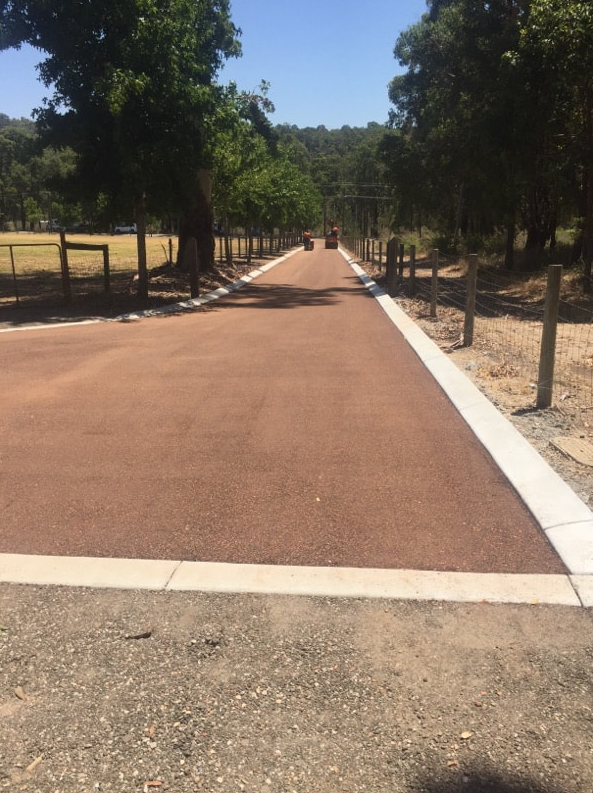
A bitumen-sealed surface is designed to provide a durable wearing layer while protecting the prepared pavement underneath from traffic and direct exposure to the elements. Over time, however, the condition of the seal can change. Aggregate may become increasingly exposed, the surface can lose its uniform appearance, and small defects may begin developing in areas that receive regular vehicle traffic.
For roads, driveways and access surfaces in Cessnock, NSW, recognising these changes early can make it easier to determine whether routine repairs, resealing or more extensive pavement work should be considered. A worn surface does not automatically mean the underlying road has failed, but it should be assessed before deterioration progresses further.
What Happens as a Bitumen Seal Wears?
A spray and seal surface typically consists of a bituminous binder applied to a prepared pavement and covered with aggregate. The binder helps hold the aggregate in place while also contributing to a protective surface over the pavement underneath.
With continued traffic and environmental exposure, this wearing surface can gradually deteriorate.
The rate and type of wear can depend on factors such as:
- Traffic frequency
- Vehicle types
- Turning and braking movements
- Existing pavement condition
- Drainage
- Previous maintenance
- Condition of the aggregate and binder
The important point is to recognise changes in the surface before they develop into potholes, widespread cracking or pavement instability.
1. The Surface Is Becoming Noticeably Rougher
A gradual increase in surface roughness can be one of the first indications that a bitumen seal is changing.
Some texture is expected from a sealed aggregate surface. The concern is when the road becomes noticeably rougher than it was previously or different sections begin developing inconsistent textures.
You may notice that vehicles no longer travel across the surface as smoothly or that particular wheel paths feel significantly rougher.
This can indicate that the wearing surface is becoming uneven or that aggregate is being lost from particular areas.
2. Loose Aggregate Is Appearing
Loose stone accumulating across the road or along its edges deserves attention.
A small amount of loose aggregate does not necessarily indicate widespread failure, particularly on a relatively recent sealed surface. However, increasing aggregate loss from an established road can indicate that sections of the seal are deteriorating.
Look for changes such as:
- Loose aggregate collecting along road edges
- Bare-looking patches appearing in wheel paths
- Increasing quantities of stone being displaced by vehicles
- Different surface textures developing across the same road
- Small areas where the underlying layer appears increasingly exposed
Where aggregate loss is concentrated in particular areas, traffic movements or localised pavement conditions may also be contributing.
3. The Bitumen Surface Looks Patchy or Uneven
A bitumen seal does not need to maintain exactly the same appearance throughout its service life, but increasingly patchy sections can provide useful information about its condition.
Some areas may appear significantly more worn than others.
This is often particularly noticeable where vehicles:
- Brake regularly
- Accelerate
- Turn sharply
- Follow the same wheel paths
- Manoeuvre frequently
These areas can experience greater stresses than sections carrying predominantly straight-moving traffic.
An assessment can determine whether the wear remains superficial or whether the pavement underneath is also beginning to deteriorate.
4. Fine Cracks Are Beginning to Develop
Cracking is an important warning sign on almost any sealed pavement.
A few isolated cracks may remain manageable, but increasing numbers of cracks can indicate that the surface is losing continuity.
Once cracks open, they can provide pathways for moisture to reach the pavement below.
Watch for:
- New cracks appearing
- Existing cracks becoming wider
- Cracks joining together
- Cracking around previous repairs
- Cracks developing through regular wheel paths
- Small sections beginning to break away
The pattern of cracking can be just as important as the individual crack itself.
If cracking is becoming widespread, the condition of the complete pavement should be assessed rather than focusing only on individual lines.
5. Water Is Beginning to Remain on the Surface
Standing water is not necessarily caused by a worn bitumen seal, but it can accelerate deterioration when combined with existing pavement defects.
If the road has developed depressions, ruts or uneven sections, rainfall may begin collecting where it previously drained away.
Water can then find its way into cracks and weakened areas.
After rainfall, look for:
- Persistent puddles
- Water collecting in wheel paths
- Wet depressions
- Moisture remaining around cracked sections
- Water accumulating beside previous repairs
These signs may indicate that surface levels and drainage need attention alongside the condition of the bitumen seal.
6. The Aggregate Is Becoming Increasingly Exposed
A sealed surface relies on the relationship between the binder and aggregate.
As the surface wears, aggregate can become more visibly exposed. When this change becomes pronounced across significant sections of the road, it can indicate that the seal is approaching the stage where professional assessment is worthwhile.
The important distinction is between normal surface texture and progressive deterioration.
If the road looks increasingly dry, open or inconsistent and loose aggregate is also becoming more common, the wearing surface may no longer be performing as effectively as it once did.
7. Small Bare Areas Are Starting to Appear
Small areas where the surface treatment has deteriorated more noticeably than surrounding sections should not be ignored.
These may initially appear as minor patches, but regular traffic can continue disturbing the edges.
Once a weak section develops, deterioration can begin spreading outwards.
Early attention can help determine whether a local repair is sufficient before a larger section of pavement becomes affected.
8. Potholes Are Beginning to Form
Potholes are a clearer indication that deterioration has progressed beyond simple visual wear.
A pothole forms when pavement material breaks away, usually after the affected section has lost sufficient strength or support.
Several factors may be involved, including:
- Water penetration
- Surface deterioration
- Weak supporting pavement
- Repeated traffic loading
- Cracking
- Drainage problems
If potholes are developing in a bitumen-sealed road, simply applying another surface treatment over them is unlikely to address the complete problem.
Failed areas should first be investigated and properly repaired.
9. Previous Repairs Are Becoming More Noticeable
Older repairs can provide useful clues about the overall condition of a sealed road.
If previous patches remain stable while the surrounding surface continues performing well, they may not be a concern.
However, if cracks are appearing around numerous repairs or new failures are continually developing beside older patches, deterioration may be becoming more widespread.
A road containing increasing numbers of isolated repairs may eventually reach the point where assessing the entire wearing surface is more useful than continuing to treat each defect separately.
10. Wheel Paths Are Wearing Faster Than the Rest of the Surface
Road surfaces do not always deteriorate evenly.
Regular traffic tends to follow similar paths, concentrating vehicle loads within particular sections. Over time, these wheel paths may begin showing wear before the rest of the road.
You may notice:
- A change in surface texture
- Greater aggregate exposure
- Small depressions
- Increasing cracking
- Loose material
- Early pothole development
This does not necessarily mean the entire surface requires treatment immediately, but it is worth determining why these sections are deteriorating faster.
11. Turning and Braking Areas Are Breaking Down
Vehicle movements can influence how quickly a bitumen surface wears.
Turning tyres can place different stresses on a sealed surface compared with vehicles travelling in a straight line. Braking and acceleration can also concentrate forces within specific areas.
Entrances, intersections within a property, manoeuvring areas and other frequently used sections may therefore show deterioration sooner.
Where wear is strongly localised, targeted repairs may be appropriate if the surrounding pavement remains sound.
12. The Road Is Developing Multiple Types of Defects
One of the clearest reasons to arrange a professional assessment is when several different problems begin appearing at the same time.
For example, a surface may have:
- Loose aggregate
- Increasing roughness
- Cracks
- Small potholes
- Depressions
- Previous patches
- Areas holding water
Individually, some of these defects may remain manageable. When several are developing across the same surface, however, they can indicate more general deterioration.
At this stage, it becomes important to determine whether the problem is primarily within the wearing surface or extends into the pavement underneath.
Does a Worn Bitumen Seal Always Need Complete Replacement?
No.
The appropriate treatment depends on how far deterioration has progressed and the condition of the supporting pavement.
If wear is limited and the underlying road remains stable, maintenance or resealing may be suitable.
Where isolated sections have failed, those areas may need repairing before further surface treatment is undertaken.
If substantial pavement weakness, deep rutting or widespread failure is present, more extensive preparation may be required.
This is why assessing the existing road is important before deciding on the next step.
When Can Resealing Be Appropriate?
Resealing may be considered where the existing surface has become worn but the supporting pavement remains suitable.
The objective is to renew the wearing surface and provide continued protection to the prepared pavement underneath.
Before resealing, however, existing problems should be identified.
Potholes, unstable patches, significant depressions and other failed sections should not simply be covered. Correcting these areas first provides a more suitable foundation for the renewed seal.
Why Timing Matters
Waiting until a sealed road contains widespread potholes and substantial pavement failure can change the type of work required.
Earlier assessment provides an opportunity to identify deterioration while more of the existing pavement remains serviceable.
For example, a worn but structurally stable surface may be suitable for resealing. If water is allowed to penetrate through increasingly open defects for an extended period, deeper pavement repairs may eventually become necessary.
Maintenance is therefore most effective when decisions are based on pavement condition rather than waiting for the surface to become severely damaged.
The Condition Underneath the Seal Is Just as Important
A bitumen seal cannot compensate for an unstable foundation.
If the pavement underneath is soft, poorly supported or significantly deformed, applying another surface treatment will not correct that underlying weakness.
Before resealing or carrying out substantial repairs, the road should be assessed for signs such as:
- Deep rutting
- Significant settlement
- Recurring potholes
- Soft sections
- Extensive deformation
- Persistent drainage problems
Where these conditions exist, additional pavement preparation may be required.
Professional Bitumen Surfacing in Cessnock, NSW
Recognising a worn bitumen seal is not simply about deciding whether the surface looks old. The pattern of wear, condition of the aggregate, cracking, drainage, traffic use and stability of the underlying pavement all need to be considered.
Cessnock Road Tek provides professional bitumen surfacing and resurfacing services in Cessnock, NSW, with attention to both the existing wearing surface and the pavement supporting it.
A professional assessment can establish whether local repairs, preparation and resealing, or more extensive pavement work is appropriate for the condition of the road.
Conclusion
The signs of a bitumen seal wearing thin can begin subtly. Increasing roughness, loose aggregate, patchy areas, exposed stone and fine cracking may appear before more serious defects develop. As deterioration progresses, potholes, depressions, recurring repairs and drainage problems can become more noticeable.
The presence of wear does not automatically mean the entire road needs to be rebuilt. Where the supporting pavement remains stable, timely repairs and resealing may provide an effective way to renew the surface and protect the road underneath. Where deeper pavement problems exist, those areas should be properly prepared before further sealing work is carried out.
For roads, driveways and access surfaces in Cessnock, NSW, Cessnock Road Tek can assess the condition of an ageing bitumen seal and recommend an appropriate maintenance or resurfacing approach. Having the surface inspected before deterioration becomes widespread can help preserve serviceable pavement and maintain a more consistent, dependable road surface.
Call us on: 02 5301 9087
Click here to find out more about Cessnock Road Tek
Click here to complete our contact form and see how we can help with your Asphalt and Bitumen Surfacing needs.